Most tree jobs in Dublin do not need an arborist. Some do, and those are usually the ones where a wrong call costs the most: a big oak over the house, a tree the city protects, an ash that might still be treatable. This page covers how to tell which kind of job you have, and how to hire for it.
For the full rundown of what each credential means, see why a certified arborist matters. For the step-by-step hiring process, see how to choose a tree service in Dublin.
Arborist vs. tree crew: what each one does
An arborist answers questions about the tree: is it healthy, is it structurally sound, can it be saved, how should it be pruned, and when. The baseline credential is the ISA Certified Arborist, an exam-based certification with continuing education to keep it current.
A tree crew does the physical work: climbing, rigging, cutting, chipping, grinding. That skill is learned on the job, and a skilled crew with no certificates can do a removal or routine trim perfectly well.
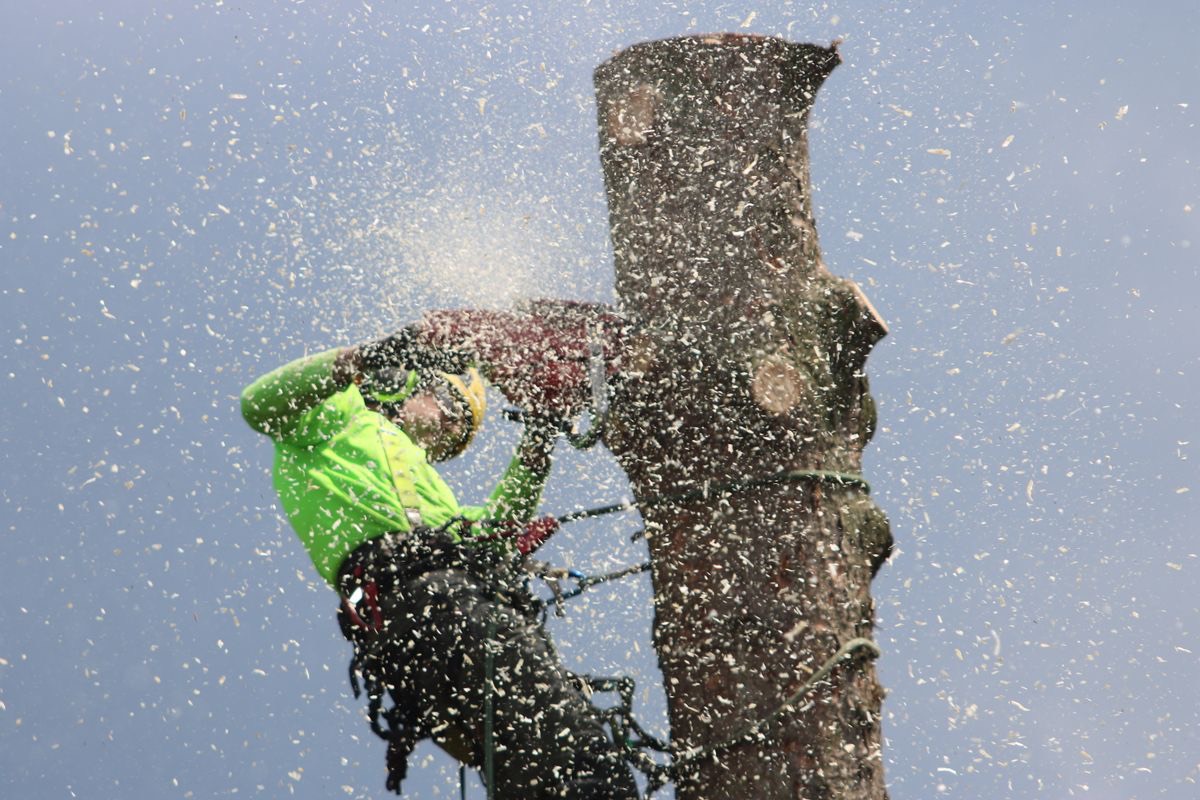
Example photo of climbing and rigging work, not from a specific Dublin job.
The two often work together. The arborist decides what should happen, and the crew carries it out. Problems tend to start when a crew is making diagnostic calls nobody on it is trained for.
Dublin jobs that call for an arborist
- “Is this tree going to fall?” Cracks, lean, decay at the base, or a large limb over the roof call for a formal risk assessment, not a guess. See tree risk assessment in Dublin.
- A tree the city may regulate. Dublin regulates trees in no-disturb zones, protected trees, and right-of-way trees, and a permitted removal can carry a replacement obligation. A written assessment of the tree’s condition helps when condition is the reason for removal. Start with the Dublin tree removal permit guide and street trees and the right-of-way.
- Treat or remove. An ash with light canopy loss may be treatable against emerald ash borer; a heavily infested one should come down. Oaks showing sudden wilting in summer need checking for oak wilt before anyone prunes nearby. More in tree health and disease.
- Pruning a tree you plan to keep. How much comes off, where the cuts go, and when it is done all affect the tree for years. See trimming and pruning and the best time to trim in Central Ohio.
Jobs that usually do not need one: grinding a stump, chipping brush, or taking down a small dead tree with nothing underneath it. Hire those on insurance, experience, and a written scope.
How to verify an ISA credential
- Ask for the name and certification number of the person who will assess the tree. A company cannot hold an ISA certification; a person does.
- Look it up in the ISA’s free public “Verify a Credential” search. It shows whether the certification is current.
- Ask whether that person will be on your property, or only supervising from the office.
- If a treatment is proposed, ask about the Ohio Department of Agriculture commercial pesticide applicator license.
“Certified arborist” on a truck or a website is not a protected phrase. The credential behind it is, which is why the lookup matters.
How arborist visits are priced
Pricing varies by company, so ask before the visit rather than after. The common arrangements:
- Free estimate visit. Common when the visit leads to quoted work such as a removal or pruning job. The assessment is informal and usually verbal.
- Paid consultation. A flat fee for an arborist to look at one or more trees and give an opinion, sometimes credited toward any work you book.
- Written report. A formal risk assessment or condition report, priced higher because of the time it takes. Worth it when a permit, an insurer, a neighbor, or a home sale is involved.
Whichever it is, get the fee and what you will receive (verbal opinion, written notes, or a formal report) in writing first. If the visit is free and the same company profits from removal, weigh a “take it down” recommendation accordingly, or get a second opinion. For removal pricing, see tree removal cost in Dublin.
Questions to ask before you hire
- Who is assessing the tree, and what is their ISA certification number?
- What defects do you see, and what risk do they create? (You want specifics, not “it looks bad.”)
- What are the options other than removal, and what does each cost?
- Does the city regulate this tree, and who handles the permit if one is needed?
- Can your insurance agent send me a certificate of insurance directly, naming me as certificate holder?
- If you prune, will the work follow the ANSI A300 pruning standard? (Topping a tree is the clearest sign it will not.)
Next steps
If you already know the tree has to go, see tree removal in Dublin. If it is an emergency, see emergency tree removal. Otherwise, browse the tree care guides or tell us about the tree.
General information about arborist credentials and Dublin tree rules, not legal advice and not a statement about any particular company’s qualifications. Verify current requirements with the City of Dublin, the ISA, or the Ohio Department of Agriculture before relying on them. Published October 2026.